
How to view sales reports in Snad
To view sales reports in Snad ERP, open Reports, then Sales invoices in the Sales card. Set the period with Pick a date, narrow the report by customer or salesman, and read Total and Grand total under the table. Click any row to see the invoice items, and use More to export or print.
In this guide7
Steps
Step 1: Open the sales invoices report
In the sidebar choose Reports, then press Sales invoices in the Sales card. To find a report faster, type its name in Search reports.... Details
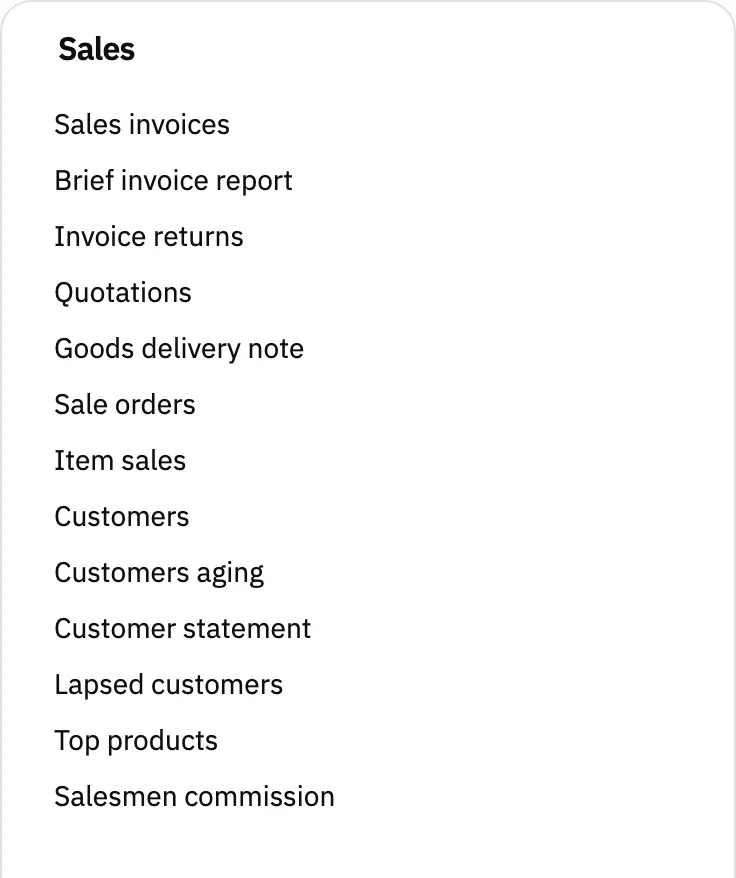
Image key - The Sales card
- Sales invoices
Step 2: Set the period
Press Pick a date, then choose a ready period such as This year, or pick the first and last day on the calendar.
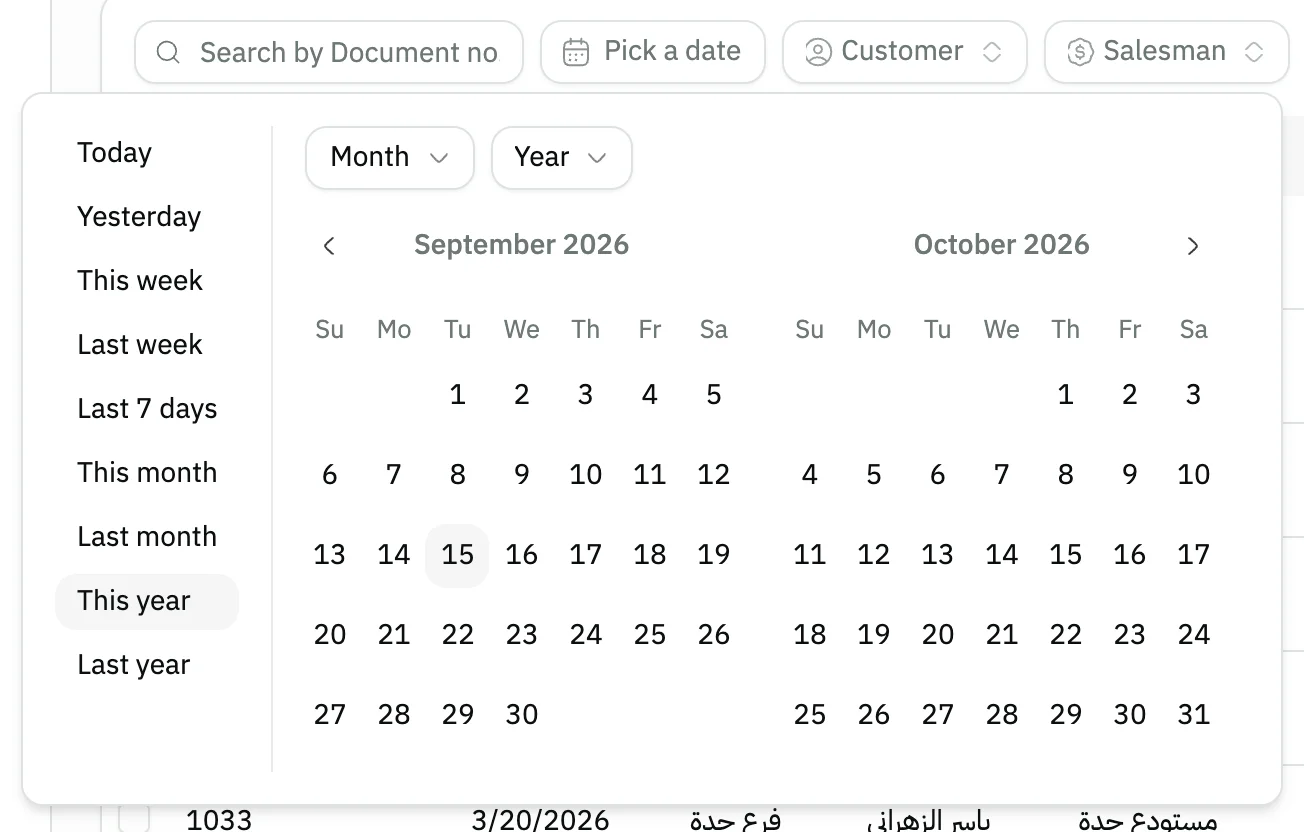
Image key - The Pick a date button
- A ready period, such as This year
Step 3: Narrow the report by customer
Press Customer, search by name, tick one or more customers, then press Apply. Salesman works the same way. Details
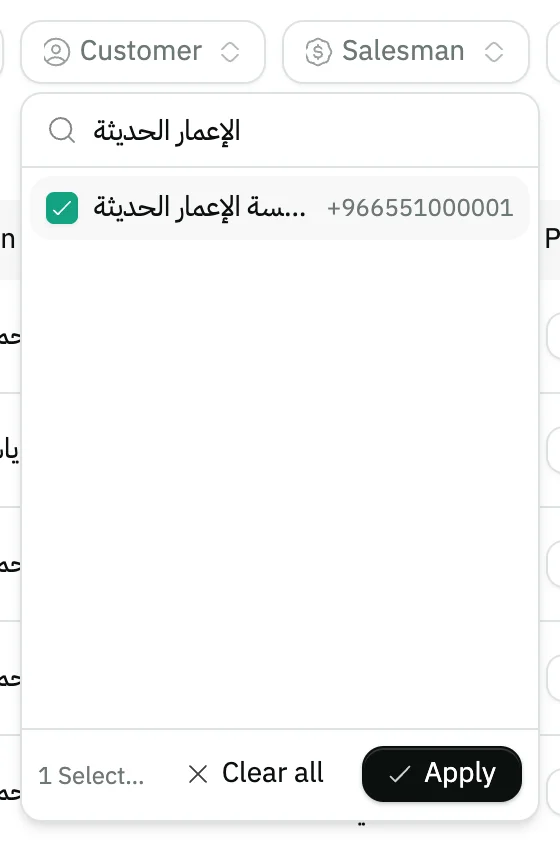
Image key - Search by customer name
- A ticked customer
- The Apply button
Step 4: Read the invoice table
Each row is one invoice: Invoice number, Created at, Customer and Payment method, then the amounts. Scroll the table sideways to see the rest of the columns, including Cash, Card and Transfer; a Split payment invoice is spread across these columns by what was paid with each method, and their three totals appear under the table. Details
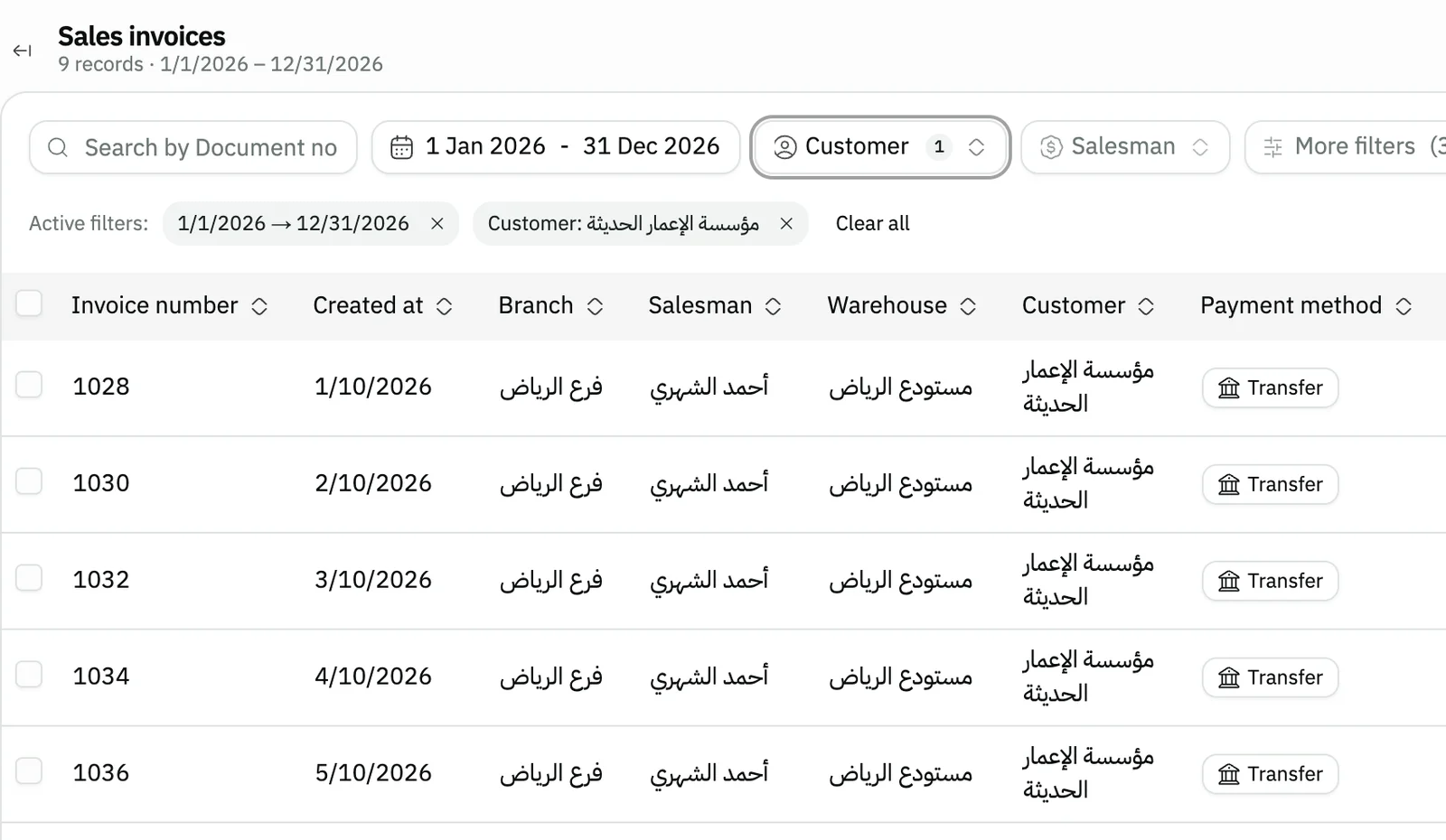
Image key - Record count
- Invoice number
- Customer
- Payment method
Step 5: Check the totals
Two rows sit under the table: Total for the records on the page you see, and Grand total for every record in the report with your filters. They match when one page holds every record.
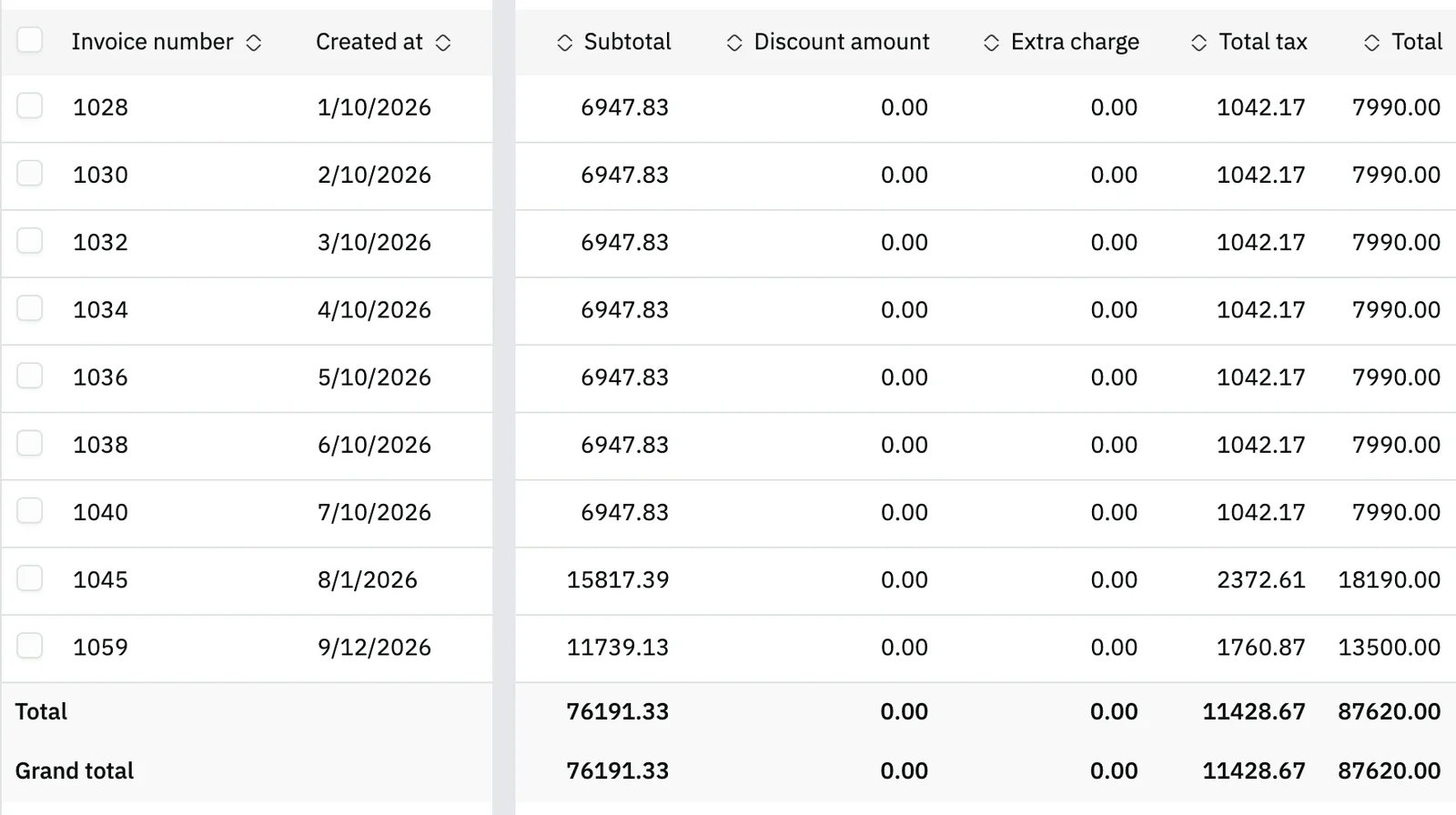
Image key - Total: the rows of this page
- Grand total: every record in the report
Step 6: Open an invoice's details
Click any row in the table and a window opens with its Items, quantities and prices. Move between invoices with the two arrows at the bottom of the window, and press Open full record to open the invoice itself.
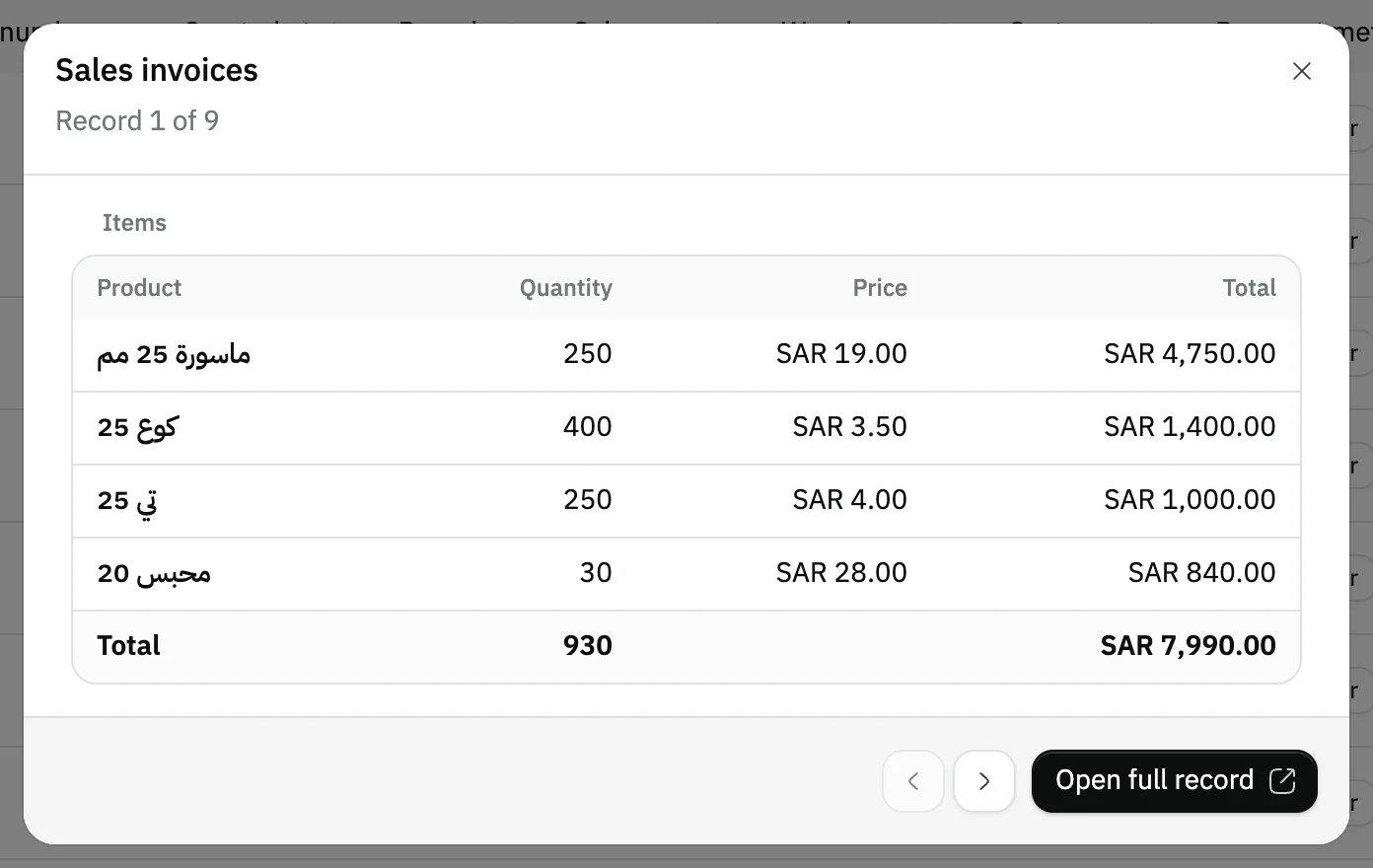
Image key - The record's place among the page's records
- Items: product, quantity, price and total
Step 7: Export or print the report
Press More, then Export as Excel or CSV to download the table, or Print to print it. Details
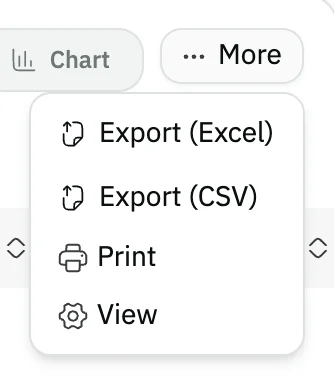
Image key - The More button
- Export (Excel)
Messages that block saving
If saving fails, one of these messages shows next to the field. The table gives the cause and the fix.
| Message | Cause | Fix |
|---|
Advanced details
Each section here explains one point from the steps in depth. Every section has a fixed link you can share.
Other sales reports
The Sales card holds other reports on almost the same screen: the filters, the table and the export work in them as in this guide.
To group sales by a custom field of your own, such as a delivery area, press Sales by custom field and pick your field in Field. The report shows one row for each value, and the page opens on the current month. The fields offered are list, text, yes/no, linked record and date fields that are not archived and not hidden from you by a permission, so Multiple choice and Rating do not show. Customer fields are added in how to add custom fields.
In Read the value from, choose The invoice to read the value from the invoice itself (the default), or The customer to read it from a field on the customer's record, so each customer's sales group under that customer's value and an invoice with no customer counts as “Not set”. A date field also shows Group dates by with two options: Day (the default) and Month, and with Month a Hijri date field is grouped by Hijri month.
The columns are Value, Total invoice count, Total invoices, Total returns, Net and Total tax, and under the table are the totals of the same columns for all rows. Rows are ordered from the largest Net, a date field from the oldest, and the “Not set” row comes last. It holds the invoices with no value in the field. Press the value of any row to open the sales invoices with that value, for the same period, branch and salesman; the “Not set” row opens the invoices with no value, and the filters applied show above the invoice list, where you remove them like any other filter. No link opens when you read the value from The customer, or for a Hijri date field grouped by Month. The invoice list does not show point-of-sale invoices (they have their own list) and does show canceled ones, while the report counts point-of-sale invoices and leaves out canceled ones, so the number of rows can differ from the invoice count of the row.
A return is counted in the row of its original invoice's value, and it falls in the period by the return's own date, not the invoice's date. Every invoice except canceled ones is counted, while Sales by payment method also leaves out incomplete invoices, so its total may differ from this report. If you added custom payment methods and the period has documents for them, that report shows a By custom payment method section under its table, with Sales, Returns and Net for each method.
When you read the value from The customer, that customer's returns follow the value the field has now, not the value on the invoice date, so if you change the field on the customer's record all of that customer's earlier invoices move to the new value in this report. A text field is grouped exactly as typed: a capital and a small letter are two different values.
The report needs the permission to view sales reports, and you narrow it with Pick a date, Branch and Salesman; your user sees only what the data access scope allows (set data access). If the field has too many values for one report, is not available to you, or grouping by Hijri month is not available, a message gives the reason: narrow the period, choose another field or group by day.
For purchases and stock: purchase reports and inventory reports. For a report by asking instead of filters: create a report with AI Mode.
- Brief invoice report and Invoice returns: invoices with fewer columns, and sales returns (how to create a sales return).
- Quotations, Sale orders and Goods delivery note: the documents that come before or after the invoice (quotation and sales order).
- In Goods delivery note there is a Custom fields button: press Add condition then Apply to narrow the report by the value of a field on the note, and a column shows for each field on the note that you ticked Show in list (custom fields).
- Item sales, Top products and Customers: sales grouped by product or by customer. In the two product reports you can also narrow the result with the Category and Brand filters.
- Customers aging and Customer statement: what each customer owes (how to view customer aging and how to view a customer statement).
- Sales by service provider: one row for each provider named on service lines, with the columns Invoices, Sales (excl. tax), Returns (excl. tax) and Net. Returns are counted from the credit-note lines dated in the period. It shows in the Sales card once services are switched on for your organization (how to create a service).
The other filters and the invoice number
Press More filters to find Warehouse, Branch and Payment method. You pick from them as you pick a customer.
The payment methods you can pick are Cash, Card, Transfer, On credit and Split payment. If you added custom payment methods, you also find Custom payment method here to narrow the invoices, and it is in the returns report and the sales by payment method report too. To reach one invoice, type its number in Document no..
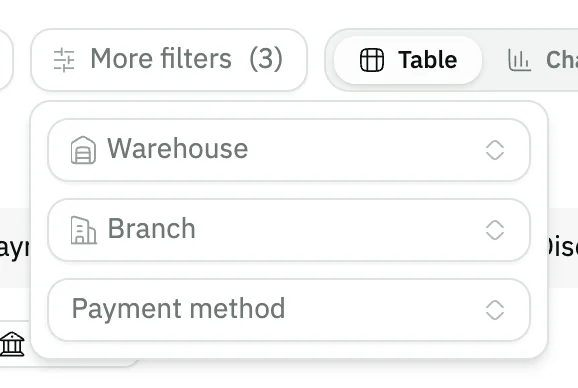
- Warehouse
- Branch
- Payment method
The chart instead of the table
Press Chart above the table to see bars sized by value for the records on the page you see; Table takes you back.
Choose what is drawn from Metric, such as Total or Net profit. The shortcut Alt + V flips between the two views.
The number cards above the report, such as Subtotal, Total and Net profit, show in both views.
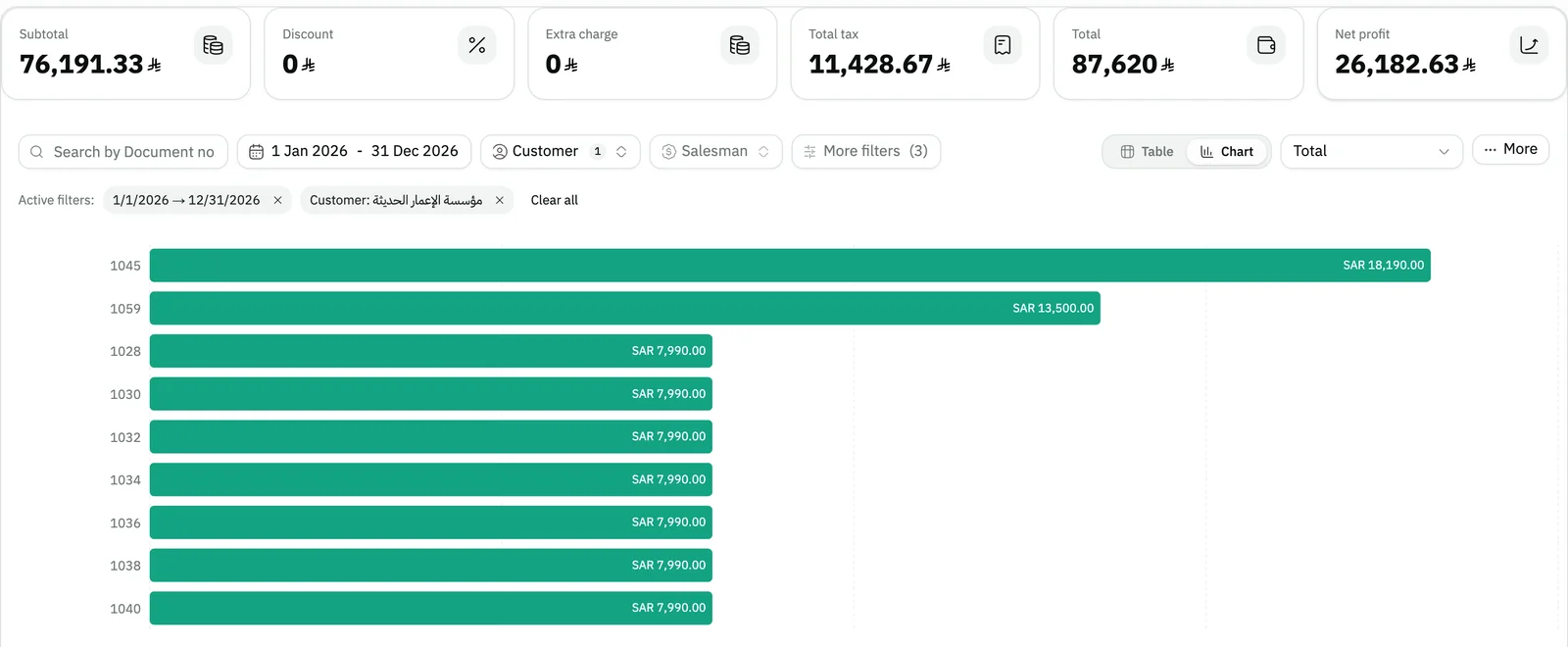
- The Chart tab
- The Metric list
What export and print include
Export and print take only the records on the page you see. Raise Rows per page (up to 250) to include more, or move between pages.
If you tick one or more rows, the export takes only those. The Excel file carries the applied filters by name and the totals.
To print the invoices themselves in their official layout, set up print settings.
Common questions
- How do I get a monthly sales report in Snad?
- Open Reports, then Sales invoices, press Pick a date and choose This month or Last month. Read the Grand total under the table.
- What is the difference between Total and Grand total?
- Total adds up only the records on the page you see. Grand total adds up every record that matches your filters, across all pages.
- How do I export the sales report to Excel?
- Press More, then Export (Excel). The file holds the records on the page you see, so raise Rows per page if you want more.
- Why can't I see the sales reports?
- The Sales card shows to users allowed to view sales reports (roles and permissions). If your user is limited to a branch, warehouse or salesman, you see only that data (set data access).
- Where do I see profit in the sales report?
- Net profit is a column at the end of the sales invoices table, and its sum is in Grand total.
- How do I see my sales by delivery area or any custom field?
- Open Reports, then Sales by custom field in the Sales card, and pick the field in Field. The report shows one row for each value, with its invoice count, Net and Total tax.