
How to create a purchase order in Snad
To create a purchase order in Snad ERP, open Purchases, then Purchase order, and press Create purchase order. Pick the Supplier, add the products with quantities and prices, then press Save. An order changes neither stock nor accounts, and you convert it to a purchase invoice when the goods arrive.
In this guide8
Steps
Step 1: Open the purchase orders
In the sidebar, choose Purchases, then Purchase order, and press Create purchase order above the list.
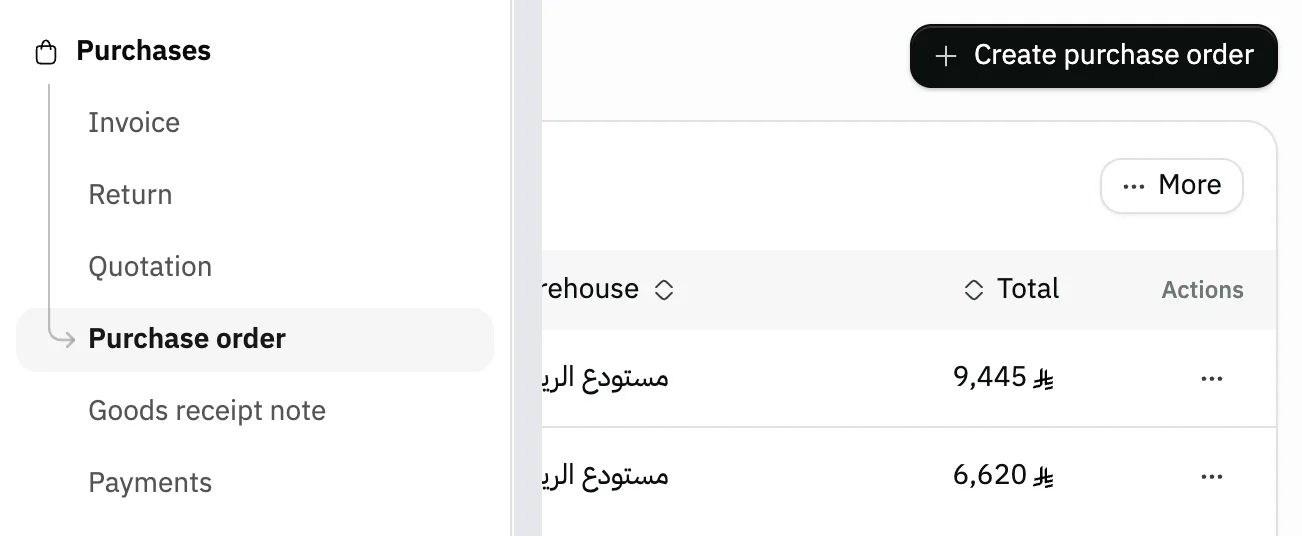
Image key - Purchase order in the sidebar
- The Create purchase order button
Step 2: Check the main information
The Main information card starts as a Purchase order. Pick the receiving Warehouse and check the order Date, which changes only if your business allows editing purchase dates. Details
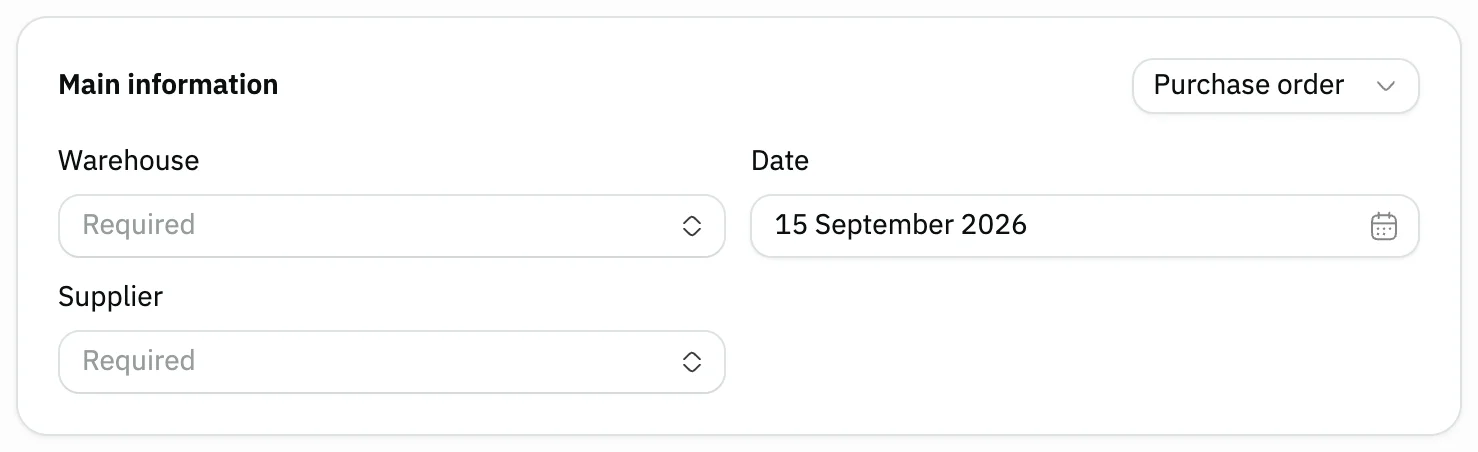
Image key - Type
- Date
- Supplier
Step 3: Pick the supplier
Press the Supplier field, type part of the name and pick it from the list. For a supplier not on file, add it from the same list as on the purchase invoice.
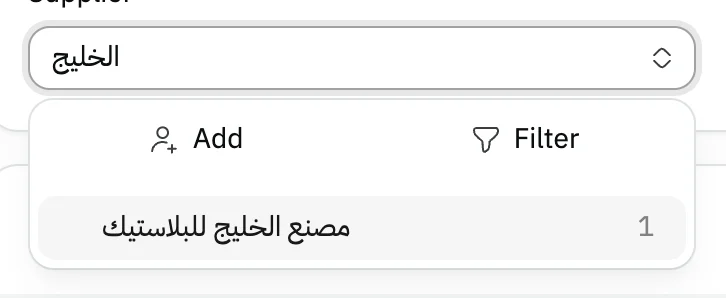
Image key - The Supplier field
- The supplier in the list
Step 4: Add the products
Press Add product, and in the Add products window search by name, tick every product you are ordering, then press Apply.
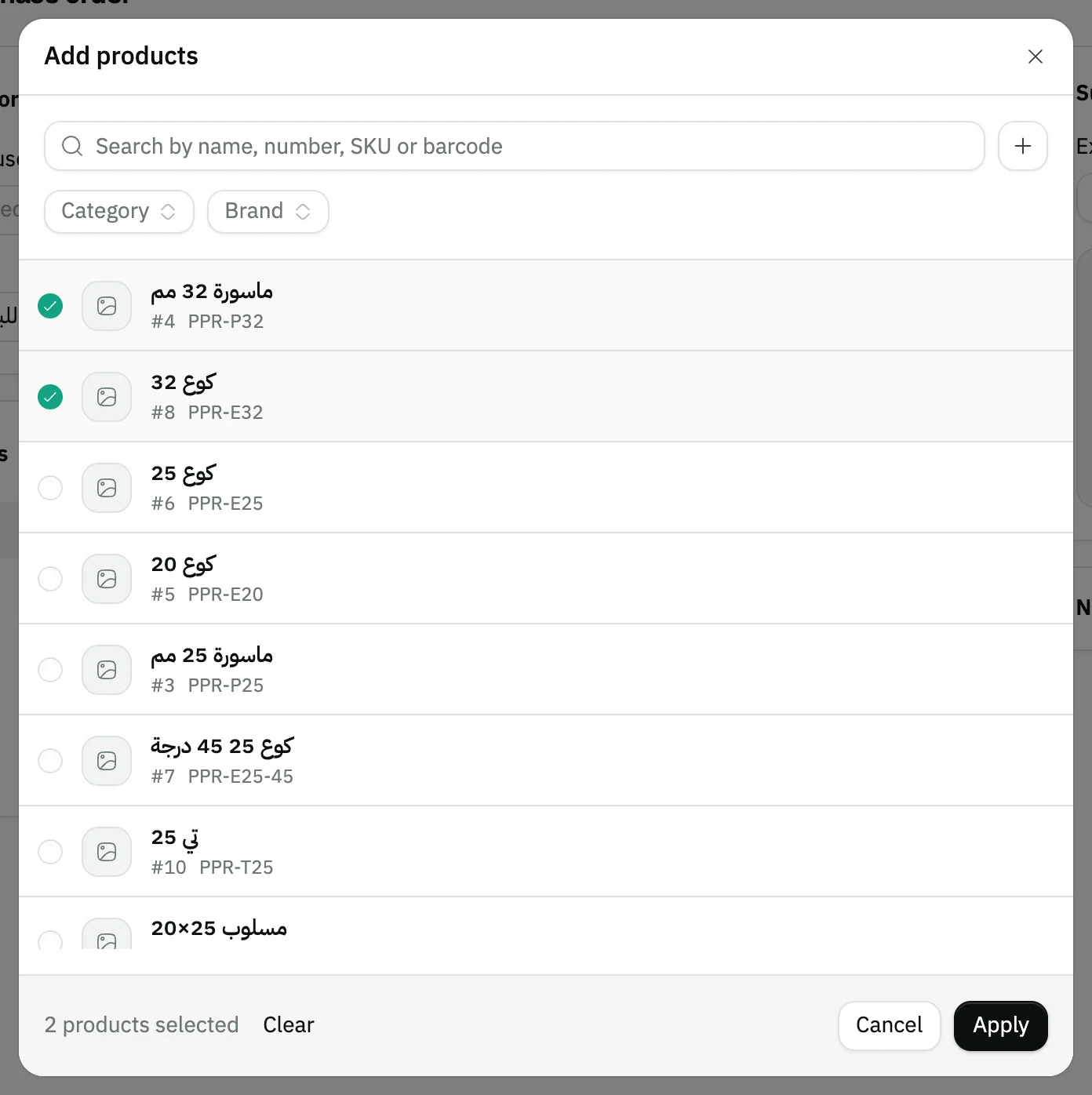
Image key - Search
- A ticked product
- The Apply button
Step 5: Set quantity and price
Each product comes in at its current cost in Price. Enter the Quantity you need, change Price to what you agreed with the supplier, and compare it with the Last buy price column: the last price you paid for the product on a purchase invoice.
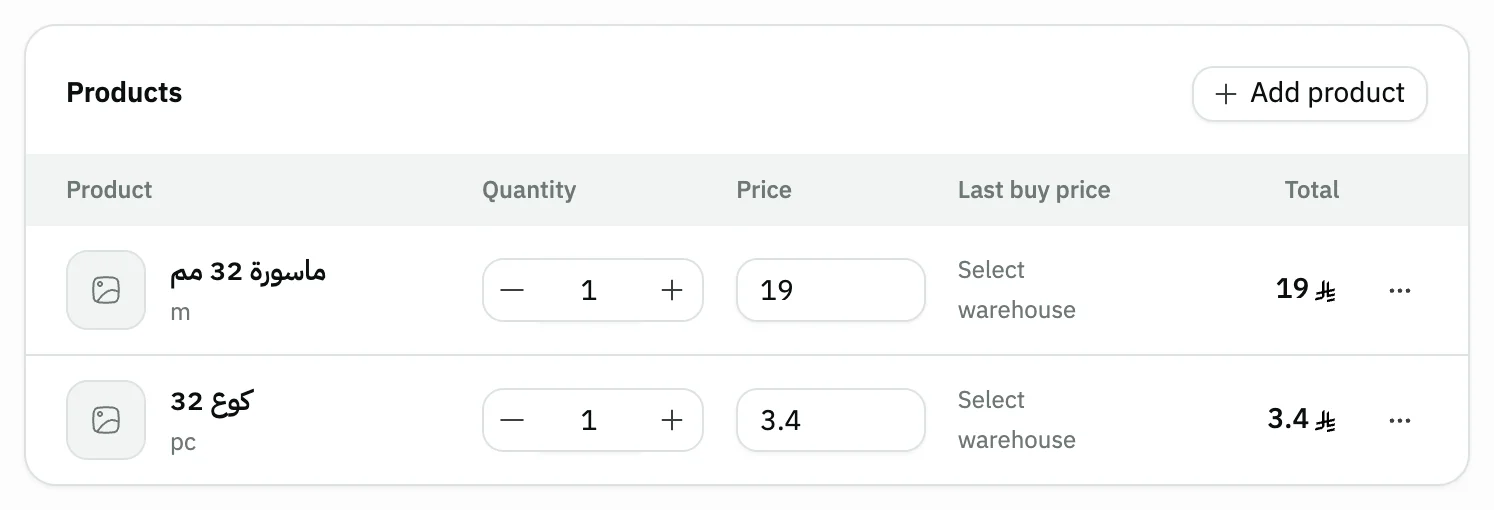
Image key - Quantity
- Price
- Last buy price
Step 6: Check the totals
In Summary add an Extra charge or a Discount percentage if you agreed on them, and check the order total. The tax shown in Total VAT is calculated from your default tax group.
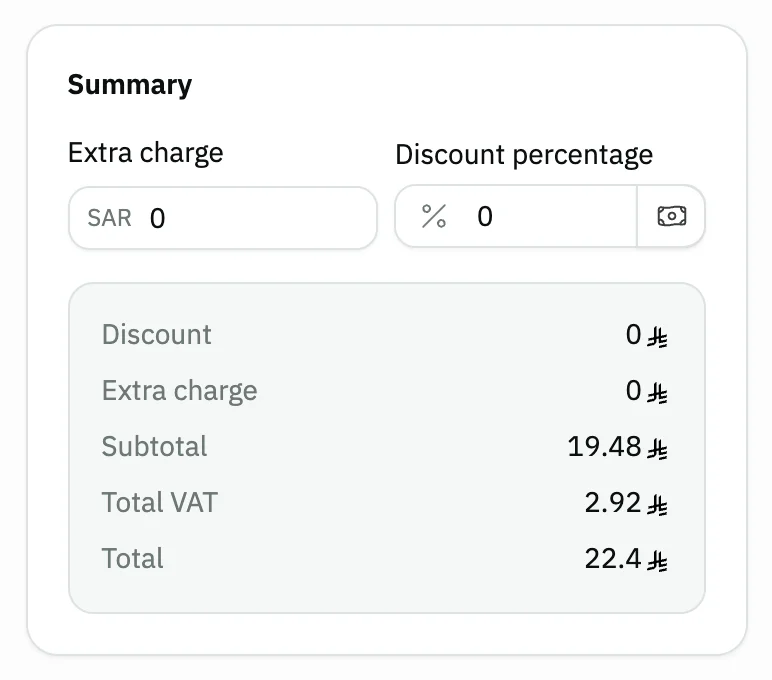
Image key - Extra charge
- Discount percentage
- The order totals
Step 7: Save the order
Press Save at the top of the page. The order gets its number, and no stock quantities or accounts change. Fill Reference and Notes first if you need them. Details
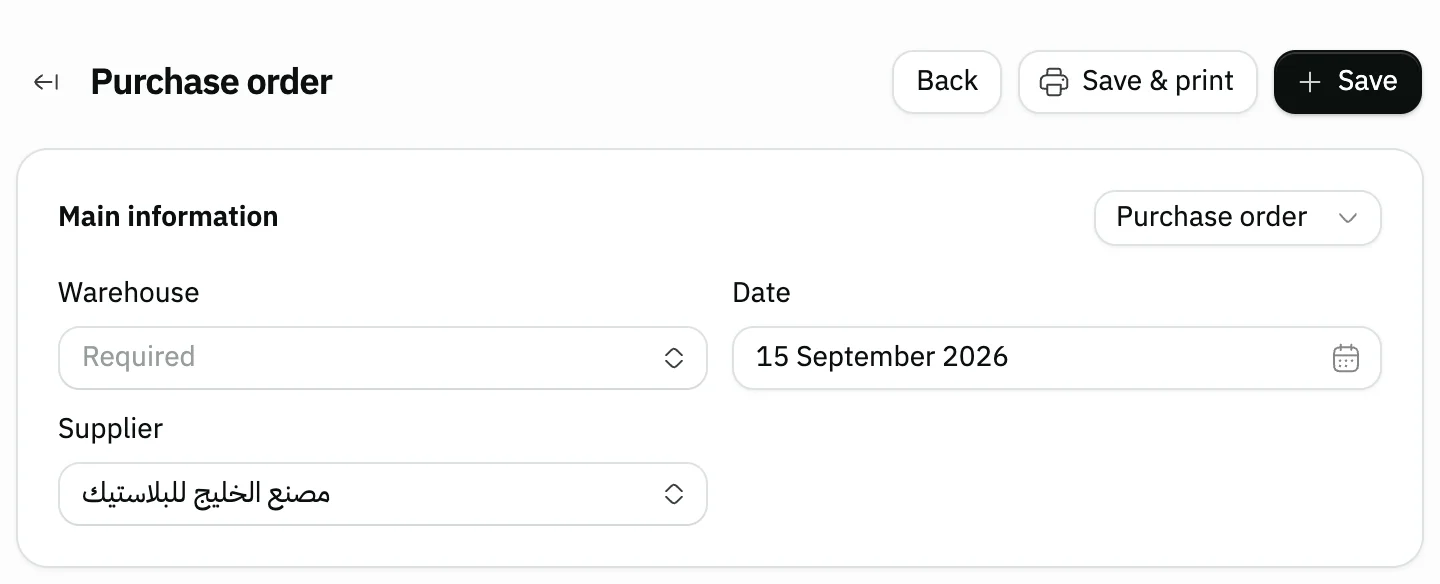
Image key - The Save button
Step 8: Share the order or convert it to an invoice
After saving, the order opens on its own page. Share gives the supplier a link to view and confirm the order. When the goods arrive, press Convert to purchase invoice to open an invoice with the same products. Details

Image key - The Share button
- The Convert to purchase invoice button
Messages that block saving
If saving fails, one of these messages shows next to the field. The table gives the cause and the fix.
| Message | Cause | Fix |
|---|---|---|
| «Pick a product first» | The order has no products, or has an empty line. | Press Add product and pick a product, or delete the empty line. |
| «Enter a price» | A line has a price of zero or none. | Type the price in the Price box of the line marked in red. |
| «Enter a quantity» | A line has a quantity of zero or none, and no free quantity. | Type the amount you need in the Quantity box, or in Free quantity for a bonus line, then save. |
| «A line with only free units must have a price of 0» | A line has a Quantity of zero and a Free quantity above zero, but its price is above zero. | Type 0 in Price for this line, or enter the paid Quantity to make it a bonus line. |
Advanced details
Each section here explains one point from the steps in depth. Every section has a fixed link you can share.
An order from a purchase quotation
The Type list offers Purchase order and Quotation. Choose Quotation and a Purchase quotation list field appears; pick the quotation there to copy its supplier and products instead of typing them.
The list shows the first 20 open quotations, and the rest load as you scroll. Search is optional and covers all open quotations, by quotation number or supplier name. If the read fails, an error line and a Retry button appear.
Create the quotation first as shown in how to create a purchase quotation.
Bonus: free units on the order
If you agreed free units with the supplier, press Add bonus above the lines to show a Free quantity box on each line. Quantity is what you pay for, with the free units on top. The button stays pressed while any line holds free units. A service line takes no free quantity, so its line shows a dash “—” instead of the Free quantity box.
For another product that comes entirely free, add it, set Quantity to zero, Free quantity to the agreed amount and Price to 0. If you leave it a price, the message “A line with only free units must have a price of 0” shows.
Once any line has free units, a Cost method card appears: Spread the cost (the default) lowers the unit cost so the stock value equals what was paid, and Do not include in cost leaves the cost as it is. Users allowed to see costs get a preview on the line, such as “Cost: 10 ← 8”, for display only.
If the same product appears on a paid line and a free-only line, its cost preview is worked out together: what is paid divided by all its units, paid and free.
When you copy a quotation that has a bonus into the order, the free quantity and cost method come with it. So they do on Convert to purchase invoice, and arrive on the invoice already set. The order itself does not change stock.
Sending the order to the supplier on WhatsApp
Snad can send the order to the supplier over WhatsApp as soon as you save it. Turn on Send purchase orders under Auto-send to suppliers in the settings, and enter the supplier's WhatsApp number on its supplier page.
Sending happens after the save without slowing the page, and Snad never sends the same order to the supplier twice.
Converting to a purchase invoice
Convert to purchase invoice shows to users allowed to create purchase invoices, while the order has not been used in an invoice. It opens the invoice form with the order's supplier, products and totals, and you finish as in how to create a purchase invoice.
Once the invoice is saved the order is marked used, and only then do the quantities enter stock.
Automatic purchase orders
Snad can suggest a purchase order by itself for products running low at a supplier with automatic ordering on. You set that up in how to reorder low-stock products and in the Auto purchasing card of the supplier page.
Common questions
- Does a purchase order add to stock?
- No. An order is only a request to the supplier. The quantities enter stock when you save the purchase invoice converted from it. To document the arrival of goods, create a goods receipt note.
- What is the difference between a purchase order and a purchase invoice?
- The order is your request for goods before they arrive; the invoice records what you actually received and its effect on stock, cost and accounts.
- How do I record a bonus I agreed with the supplier on the order?
- Press Add bonus above the lines, enter the amount in Free quantity, then pick the Cost method. Details are in bonus.
- How do I send the order to the supplier?
- Open the saved order and press Share, then Send via WhatsApp or copy the link. For automatic sending turn on Send purchase orders in the settings.
- Can I convert an order to an invoice more than once?
- No. Once the invoice is saved the order is marked used and the Convert to purchase invoice button disappears from it.